Southern California Black Walnut Tree Information
Images of Southern California Black Walnut:
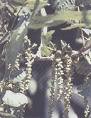

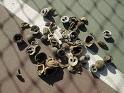
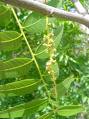
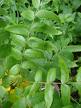
Southern California Black Walnut grows in the following 2 states and provinces:
California, HawaiiInformation about Southern California Black Walnut:
The Juglans Californica is commonly known as the California Black Walnut, California Walnut, Southern California Black Walnut as well as Southern California Walnut.
The currently accepted scientific name for California black walnut is Juglans californica S. Watson . There are two varieties: J. c. var. californica (southern california black walnut) and J. c. var. hindsii Jepson (northern California black wanut). California black walnut hybridizes readily with black walnut (J. nigra) and English walnut (J. regia). Southern California walnut is endemic to California . The current distribution of southern California walnut-dominated forests and woodlands is limited to the Santa Clarita River drainage in the vicinity of Sulphur Mountain, small stands in the Simi Hills and Santa Susana Mountains, the north slope of the Santa Monica Mountains, and the San Jose, Puente, and Chino hills. The best remaining stands are in the San Jose Hills . Outside of this range, southern California walnut occurs in Santa Barbara, western San Bernardino, and northern San Diego counties . It is conspicuously absent from the coastal foothills of the Santa Ana Mountains, San Diego County . Southern california walnut is cultivated in Hawaii .Southern California walnut woodland may be monospecific or mixed. Coast live oak (Quercus agrifolia) frequently codominants in the walnut woodland . Between Santa Barbara and Orange counties, southern California walnut is locally dominant or codominant in the coast live oak phase of oak woodland . Narrow, isolated stands of southern California walnut sometimes occur in chaparral . Occasionally, southern California walnut is found in coastal sage scrub . Classifications naming southern California walnut as a dominant or indicator species are as follows: Community ecology and distribution of California hardwood forests and woodlands Californian evergreen forest and woodland Oak woodland Vegetation types of the San Gabriel Mountains Demographic structure of California black walnut (Juglans californica; Juglandaceae) woodlands in southern California An introduction to the plant communities of the Santa Ana and San Jacinto Mountains . Associated species not previously mentioned include arroyo willow (Salix lasiolepis), California sycamore (Platanus racemosa), white alder (Alnus rhombifolia), California bay (Umbellularia californica), laurel sumac (Malosma laurina), sugar sumac (Rhus ovata), toyon (Heteromeles arbutifolia), Mexican elder (Sambucus mexicana), redberry (Rhamnus crocea), coffeeberry (R. californica), hollyleaf cherry (Prunus ilicifolia), birchleaf mountain-mahogany (Cercocarpus betuloides), California scrub oak (Quercus dumosa), poison-oak (Toxicodendron diversilobum), spiny ceanothus (Ceanothus spinosus), bigpod ceanothus (C. megacarpus), California sagebrush (Artemisia californica), California buckwheat (Eriogonum fasciculatum), black sage (Salvia mellifera), fuschia-flower gooseberry (Ribes speciosum), brome (Bromus spp.), wild oat (Avena fatua), sweetscented bedstraw (Galium triflorum), rape mustard (Brassica rapa), wildrye (Elymus spp.), and Mexican whorled milkweed (Asclepias fascicularis) .Some of the information provided here is attributed to:Esser, Lora. 1993. Juglans californica. In: Fire Effects Information System, [Online]. U.S. Department of Agriculture, Forest Service, Rocky Mountain Research Station, Fire Sciences Laboratory (Producer). , available at the USDA Fire Effects Information System (FEIS) website