Rock Oak Tree Information
Images of Rock Oak:

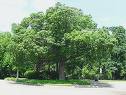
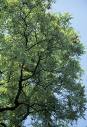
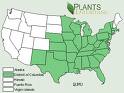
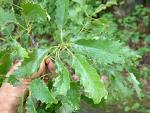
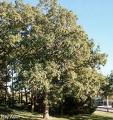
Rock Oak grows in the following 37 states and provinces:
Alabama, Arkansas, Colorado, Connecticut, Delaware, Florida, Georgia, Illinois, Indiana, Iowa, Kansas, Kentucky, Louisiana, Maine, Maryland, Massachusetts, Michigan, Minnesota, Mississippi, Missouri, Nebraska, New Jersey, New Mexico, New York, North Carolina, Ohio, Oklahoma, Ontario, Pennsylvania, Rhode Island, South Carolina, Tennessee, Texas, Vermont, Virginia, West Virginia, WisconsinInformation about Rock Oak:
The Quercus Muehlenbergii is commonly known as the Chestnut Oak, Chinkapin Oak, Chinquapin Oak, Rock Chestnut Oak, Rock Oak, Yellow Chestnut Oak as well as Yellow Oak.
The currently accepted scientific name of chinkapin oak is Quercus muehlenbergii Engelm. . Many authorities recognize this species under an alternate spelling, Q. muhlenbergii Engelm. . Chinkapin oak is a member of the white oak subgenus or section (Lepidobalanus) and is placed within the chestnut oak subsection (Prinoideae Trelease) . Two forms have been delineated on the basis of leaf and nut morphology . A form characterized by wide leaves has been identified as Q. muehlenbergii f. alexanderi (Britton) Trel. . Chinkapin oak hybridizes with many other oak species, including bur oak (Q. macrocarpa), white oak (Q. alba), Gambel oak (Q. gambelii), dwarf chinkapin oak, Q. x deamii, Q. x introgressa, and Q. bicolor x prinoides . Hybridization with gray oak (Q. grisea) and swamp white oak (Q. bicolor) is suspected . Q. x deamii (=Q. fallax) is probably a hybrid of chinkapin oak and white oak or chinkapin oak and bur oak . Q. introgressa may be a natural hybrid of chinkapin oak and dwarf chinkapin oak. Introgressants and hybrid swarms between chinkapin oak and dwarf chinkapin oak are common .Chinkapin oak is widely distributed throughout much of eastern and central North America . Its range extends from New England and Pennsylvania southward mostly in the mountains through Virginia and the Carolinas to northwestern Florida, westward to northern Mexico, south-central Texas, and Oklahoma, and north to Minnesota, Wisconsin, southern Ontario, and southern Michigan . Local and disjunct populations occur in western Texas, New Mexico, and northeastern Mexico . In the eastern United States, chinkapin oak is relatively rare throughout much of the Atlantic and Gulf coastal plains . It is uncommon or rare in Pennsylvania and in New England . Chinkapin oak reaches greatest abundance in the Mississippi and Ohio valleys .Chinkapin oak grows as a codominant with bur oak (Quercus macrocarpa) and hackberry (Celtis occidentalis) in gallery forests of the Konza Prairie in northeastern Kansas . In most other locations it occurs as scattered individuals within a mixed overstory.Some of the information provided here is attributed to:Tirmenstein, D. A. 1991. Quercus muehlenbergii. In: Fire Effects Information System, [Online]. U.S. Department of Agriculture, Forest Service, Rocky Mountain Research Station, Fire Sciences Laboratory (Producer). , available at the USDA Fire Effects Information System (FEIS) website